HVAC and automation: designing an installation you can operate
Heating, ventilation and air conditioning are about more than selecting a heat pump or an air-handling unit. Industrial design must connect process requirements, equipment, electrical controls and actual operating conditions.
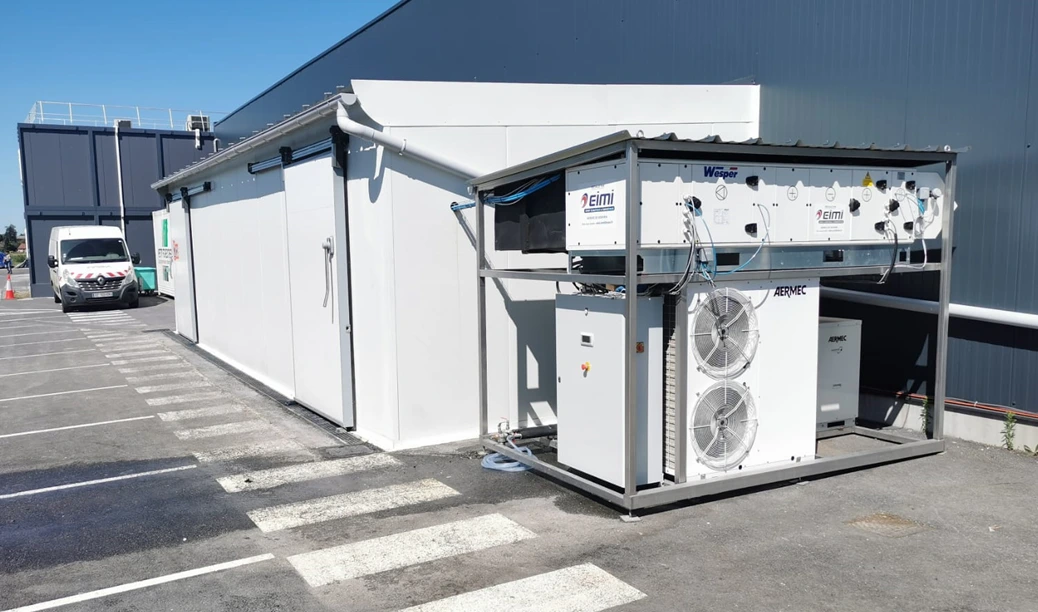
Start with the conditions the process needs
An office, a rearing room and a test enclosure have different priorities. Before selecting equipment, define temperature and humidity ranges, load variations, operating hours and ventilation requirements. Maintenance access is also part of the brief.
Design must account for the intended operating modes: start-up, production, shutdown, cleaning and maintenance as applicable.
Connect HVAC and automation
Control loops adjust a measured variable towards a setpoint. Automation manages sequences and operating conditions. Supervisory systems make that information available to operators. These functions need to be defined together.
For an air-handling unit, damper opening, fan start-up and heating permission are connected actions. Their sequence, feedback signals and fault responses must be described in a functional specification suited to the installation.
Design the control panel alongside the process
Electrical drawings and control panels turn operating decisions into a wired installation. They must remain consistent with sensor and actuator lists, input/output schedules, power supplies and interfaces with other equipment.
Ludovic Leclercq’s documented experience brings together electrical studies, panel manufacturing, programming and commissioning. At DIS, these skills complement the design and integration of HVAC systems and special-purpose machinery, with supplier and installation interfaces addressed during engineering.
Use monitoring to understand actual operation
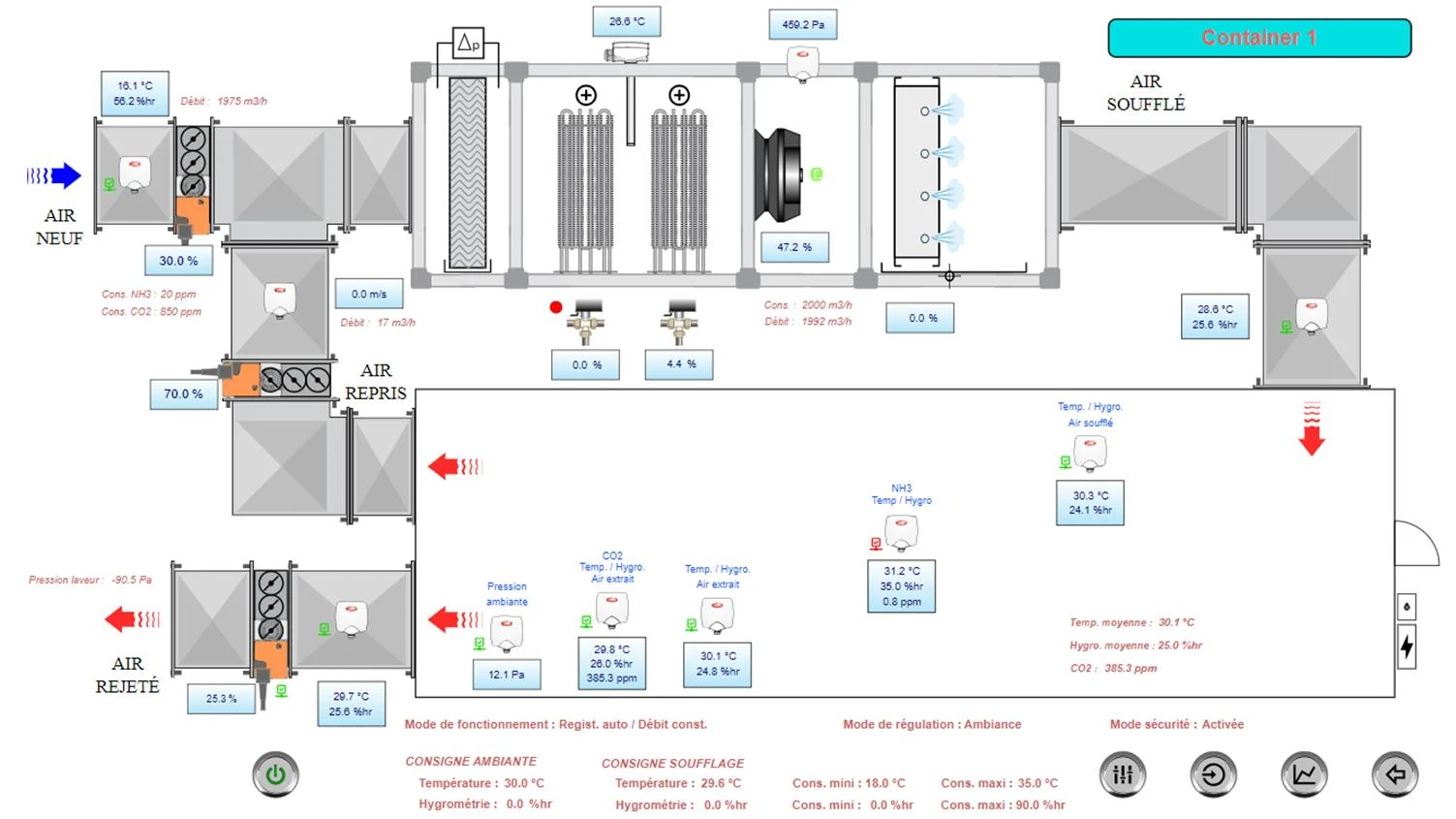
A useful supervisory interface brings measurements, setpoints, commands and equipment feedback together. Historical data help compare expected and observed behaviour: does a setpoint change at the right time? Does equipment keep running outside its intended mode? Does an alarm repeatedly return?
Cerema describes using building management data to identify inconsistencies and monitor performance. Industrial comparisons must also account for production conditions. Lower consumption alone does not demonstrate improved efficiency if output has fallen.
Testing connects design with the site
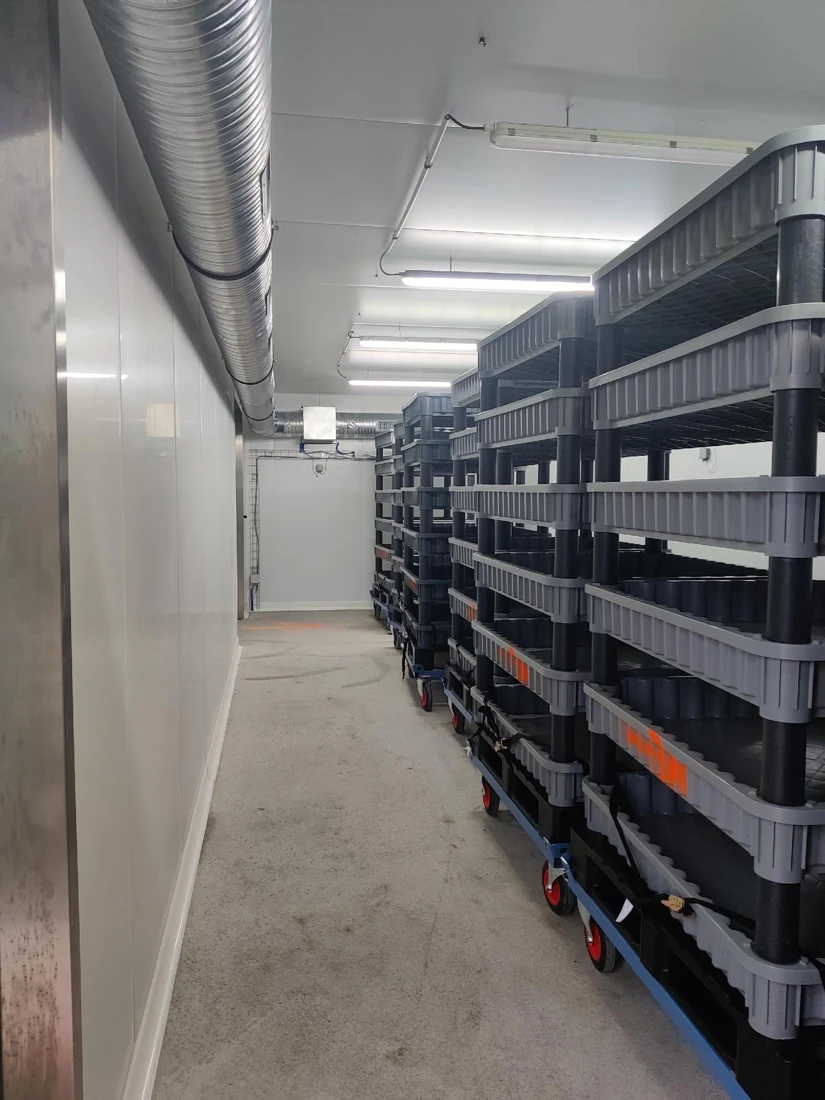
The GZ1, GZ2 and GZ3 projects and the HVAC test rig in Sylvain Davrout’s Innovafeed experience illustrate the connection between environmental conditions, equipment and monitoring. The rig combined a test enclosure, air-treatment equipment and instrumentation to compare design choices against measurements. These projects predate DIS.
A new installation’s test plan is agreed with the client. It can include:
- checking identification and inputs/outputs, from the measurement to its display;
- testing sequences, alarms, fallback modes and restart conditions;
- validating identified safety functions using an appropriate protocol;
- testing under agreed load conditions against acceptance criteria;
- handing over updated drawings, software versions, settings and outstanding items.
The aim is an installation whose operation is understood, verified and transferable to the people who will use it.
Assess energy savings against a measured baseline
Heat recovery, heat pumps, setpoint adjustments and operating sequences are options to assess against process needs. Their value depends on defined conditions, operating hours, production and baseline consumption.
Establish the initial state, implement the selected changes and compare results under documented conditions. A universal saving percentage cannot be inferred simply from choosing a particular controller or HVAC unit.
Continuity from design to commissioning
DIS connects sizing, equipment integration, electrical design and automation. The objective is to resolve interfaces with coordinated specialists and hand over the information operators need.
Documents and further reading
Based on the HVAC and pilot-plant projects presented in Sylvain Davrout’s professional background, Ludovic Leclercq’s CV and the historical Régulation & Services presentation. That company’s client references are not presented as DIS projects.
Cerema — Technical operation and energy monitoring using building management data, June 2025 (in French). This resource concerns buildings; industrial processes require their own assessment.
Related article
Special-purpose machinery: from design to delivery, with conformity built in ↗